Everyone knows what a Rhino is, some of us even know that their scientific name is Rhinocerotidae (Bradford, A. 2018). Even then some people call them it while others call them they. Why is that? Why do people think of these beasts in different ways? Want to find out the good the bad and the ugly? Perfect lets see what all of these years of roaming with these giants has done.

Let’s start with a few of the good and happy bits that have come from this relationship. Despite numbers of wild rhinos decreasing every year zoos have been able to breed and release rhino back into the wild (Gill, V. 2019). While they are in the zoos research is constantly being done to improve their welfare, this will increase both the rhinos physical health as well as their mental health (BIAZA. 2018). This is all done through the enrichments that they are given such as different food, scent and item enrichments; these will all stimulate the rhino which will increase their mental health as well as depending on the enrichment can also increase their physical health (EAZA. 2018).
A lot of the work in zoos and the research done at some have been proven to work effectively to increase welfare, for an example Carlstead found that breeding success were positively correlated to the size of the enclosure (Sherwen, S. L. & Hemsworth, P. H. 2019). With this research zoos are able to build larger enclosures for their rhinos because they now know that they need a larger enclosure than what they originally thought.

For the positive sides for the human interactions with rhinos it is more often than not to do with either zoos or conservation work that is being done which is a shame because these unicorn looking creatures do not seem to be getting much love when they are out in the wild.
In the wild rhinos have three different types of interaction: Tourist driving past looking at them, conservation efforts which means that it will be park rangers making sure that the rhinos are still alive, and then last but not least. Poachers. For a lot of rhinos, they are the last thing they see.
Now that the happy stuff that everyone came for is over it’s time to face reality about what we have done to these animals. As most people know rhinos are being poached for their ivory, this decreases the number of rhinos in the wild and makes rhinos more aggressive around humans because of the fact that they live purely off of instinct and see humans as a threat (WWF. 2019). A massive example of how bad it has gotten research was carried out at Stony Brook University showing that in 2013 three rhinos were being poached every day in South Africa (Rehberger, S. 2014). With the numbers decreasing so rapidly it has left the welfare of rhinos in the wild at the lowest it could be, with rhinos becoming more and more aggressive towards humans and breeding in the wild not being very successful due to the poaching killing off possible mothers (Smith, A, D. 2010).
Poaching is not the only negative thing that has come from the human interaction with rhinos, believe it or not simple tourism has affected rhinos welfare both in zoos and out in the wild (Carr, N. & Broom, D, M. 2018). It is expected in zoos that tourists will affect rhinos welfare in some form because zoos are not able to get tourists to look around the zoos in ideal conditions for all of the animals. The bigger concern is the disruption that tourists on safari are having on the welfare.
.jpg)
With tourists going into rhinos habitat it interrupts their lifestyle. Although tourists are known for making situations worse when it comes to wildlife there are now what are called eco-tourist trips that people can do; these trips have been found to reduce the amount of poachers within the area of the trip due to anti-poaching rangers going around with the tourists (Rushby, K. 2015).
Tourists have been a huge concern towards the welfare of the rhinos on safaris, but with projects such as the eco-tourism it makes tourists less damaging towards rhinos (Haines, G. 2016). An example of this is in Botswana where they have Natural Selection which is a collection of safari camps and mobile safaris (Natural Selection. 2020). This high-end tourism has been found to lower the amount of poachings as well as improved conservation efforts; all of this helps improve the welfare of the rhinos because they start to have less negative interactions with humans in the wild meaning that they are able to carry on their day (Holland, M. 2017).
Zoos are constantly doing research to make sure that the welfare for rhinos in their collections are as good as they can be. It is recognised that rhinos in zoos do not have the welfare that they would ideally have compared to if they were in the wild (Derkley, T., Biggs, D., Holden, M. & Phillips, C. 2019). Because of this a standard has been set to be as close to what they would have in the wild as is possible (Hosey, G. & Melfi, V. 2018).
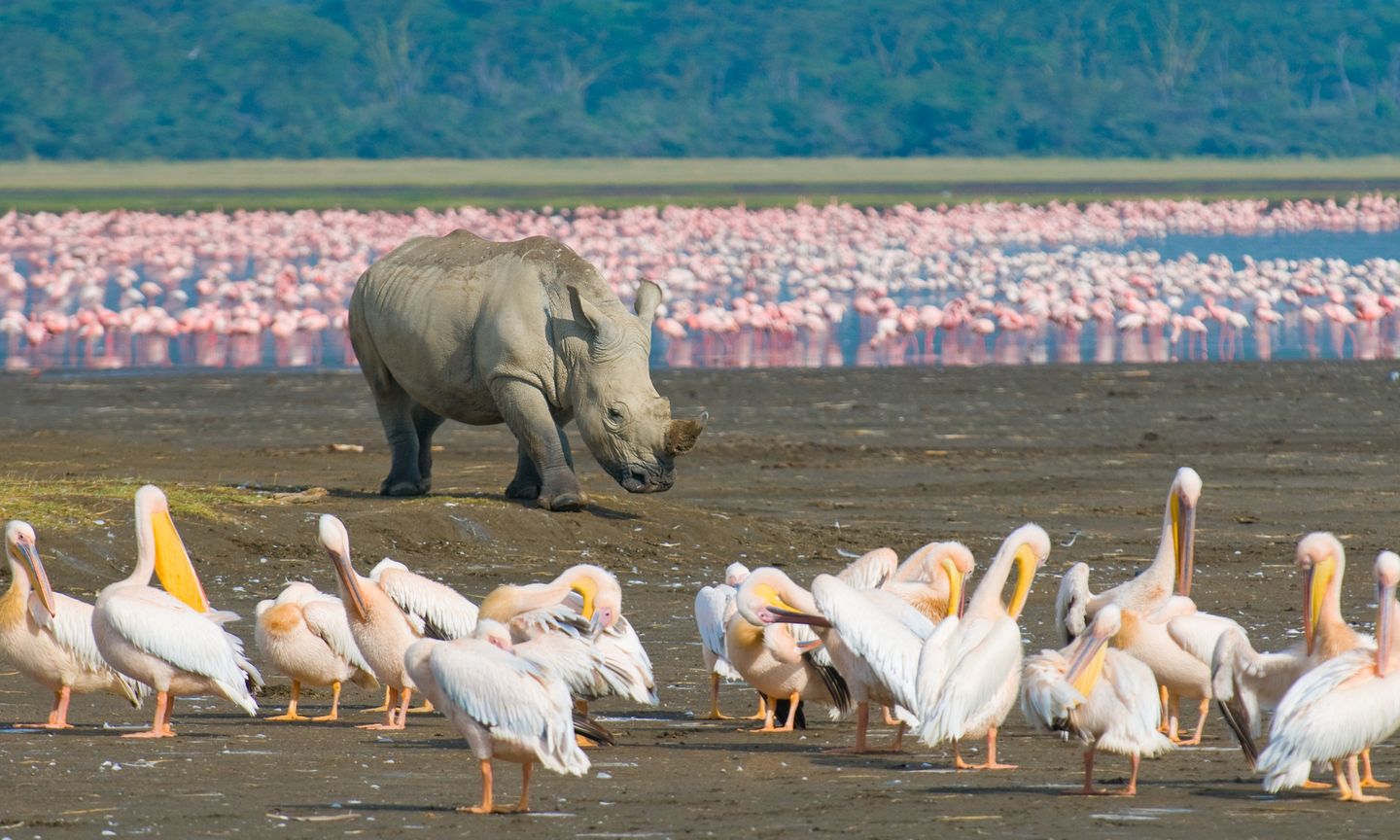
To sum everything up, as humans we do both positive and negative things towards the welfare of rhinos, both in zoos and in the wild. Zoos do their best to provide the conditions that rhinos prefer while not being able to provide perfect conditions (Cole, J. & Fraser, D. 2018). In the wild efforts are being made to reduce poaching so that welfare standards for rhinos are high as they would be able to live their lives in peace.
With that information and those examples of real world activities that are occurring I shall leave you to decide whether what we are doing to rhinos welfare is a good thing or a bad thing.
Are we trying to play god with these animals too much? That is your decision to make.
References:
- BIAZA. (2018). Animal care & management. Retrieved from https://biaza.org.uk/animal-welfare
- Bradford, A. (2018). Facts About Rhinos. Live Science Contributor. Retrieved from https://www.livescience.com/27439-rhinos.html
- Carr, N. & Broom, D, M. (2018). Tourism and Animal Welfare. Retrieved from https://books.google.co.uk/books?hl=en&lr=&id=W_VeDwAAQBAJ&oi=fnd&pg=PR3&dq=effects+of+tourists+in+zoos+on+animals&ots=rmzllLnLJJ&sig=G7EB5c9yAUD_G_IYcX0-veCtBc8#v=onepage&q&f=false
- Cole, J. & Fraser, D. (2018, October 16). Zoo Animal Welfare: The Human Dimension. Journal of Applied Animal Welfare Science, Volume 21 (Issue 1). Retrieved from https://www.tandfonline.com/doi/full/10.1080/10888705.2018.1513839
- Derkley, T., Biggs, D., Holden, M. & Phillips, C. (2019, July). A framework to evaluate animal welfare implications of policies on rhino horn trade. Biological Conservation, Volume 235. Retrieved from https://www.sciencedirect.com/science/article/abs/pii/S0006320718311947
- EAZA. (2018). EAZA Best Practice Guidelines for the white rhinoceros. Retrieved from https://www.eaza.net/assets/Uploads/CCC/2018-EAZA-Best-Practice-Guidelines-White-rhinoceros-Approved.pdf
- Gill, V. (2019). Rhino release: Endangered animals despatched to Rwanda. Science & Environment. Retrieved from https://www.bbc.co.uk/news/science-environment-48691443
- Haines, G. (2016). The Big Five’s most elusive beast? Where to see rhinos in the wild. Retrieved from https://www.telegraph.co.uk/travel/advice/rhinos-where-to-see-them-and-how-to-help-them/
- Helping Rhinos. (2019). THE IMPACT OF RHINO POACHING. Retrieved from https://www.helpingrhinos.org/rhino-poaching/
- Holland, M. (2017, October 18). HOW BOTSWANA’S HIGH-QUALITY, LOW-IMPACT TOURISM MODEL IS HELPING PUT AN END TO RHINO POACHING. INDY LIFE. Retrieved from https://www.independent.co.uk/travel/africa/botswana-rhinos-anti-poaching-unit-help-conservation-south-africa-tourism-a8005516.html
- Hosey, G. & Melfi, V. (2018). Anthrozoology: Human-Animal Interactions in Domesticated and Wild Animals. Retrieved from https://books.google.co.uk/books?hl=en&lr=&id=AMt-DwAAQBAJ&oi=fnd&pg=PA81&dq=standard+welfare+for+%22rhinos%22+in+zoos&ots=5EBoa-4FQ6&sig=X97vvMfm6MQe6XDAkNJ-FMWnAJI#v=onepage&q&f=false
- Huges, L. (2019). Rare treats: The best places to still see rhinos in the wild. Retrieved from https://www.wanderlust.co.uk/content/where-in-the-world-to-see-rhinos/
- Natural Selection. (2020). Safaris of Character. Retrieved from https://naturalselection.travel
- Rehberger, S. (2014). Vanishing Rhinos – The Impact of Rhino Poaching on the South African Ecosystem. Retrieved from http://www.scientistafoundation.com/lifestyle-blog/-vanishing-rhinos-the-impact-of-rhino-poaching-on-the-south-african-ecosystem#
- Rushby, K. (2015). Help stop poaching: go on safari in Africa. Retrieved from https://www.theguardian.com/travel/2015/may/30/africa-safari-tourism-elephants-conservation
- Save The Rhinos. (2019). Rhino conservation in zoos. Retrieved from https://www.savetherhino.org/thorny-issues/rhino-conservation-in-zoos/
- Sherwen, S. L. & Hemsworth, P. H. (2019). The Visitor Effect on Zoo Animals: Implications and Opportunities for Zoo Animal Welfare. Pg7.
- Smith, A, D. (2010). Poachers kill last female rhino in South African park for prized horn. Retrieved from https://www.theguardian.com/environment/2010/jul/18/poachers-kill-last-female-rhino
- WWF. (2019). Rhino. Retrieved from https://wwf.panda.org/knowledge_hub/endangered_species/rhinoceros/
 Our Rocky Relationship With one of the Worlds Largest Animals